When the United States tested the first nuclear weapon on July 16, 1945, the world was ushered into a new age of nuclear terror.
The United States, and later other nuclear powers, wielded nuclear testing as both a show of power and a way to collect new data about nuclear weapons for the next few decades. Between 1945 and 1992, the United States conducted 1,032 explosive nuclear weapons tests, primarily in Nevada but also in other western United States and islands across the Pacific.
However, these tests did not come without consequences. Generations of Americans today are still poisoned from the radiation exposure their forefathers experienced. Nuclear testing sites like Nevada and the Marshall Islands still carry the scars of former nuclear tests. Across the world, nuclear tests left a formidable mark on those who lived downwind of their radiation.
In October 2025, President Donald Trump called for the resumption of “nuclear testing” and administration officials have made several references to a supposed “need” to return to testing ever since. The fact is that the U.S. nuclear weapons program was designed not to require further testing, and any resumption would only benefit U.S. potential adversaries while threatening further environmental degradation.
The Past
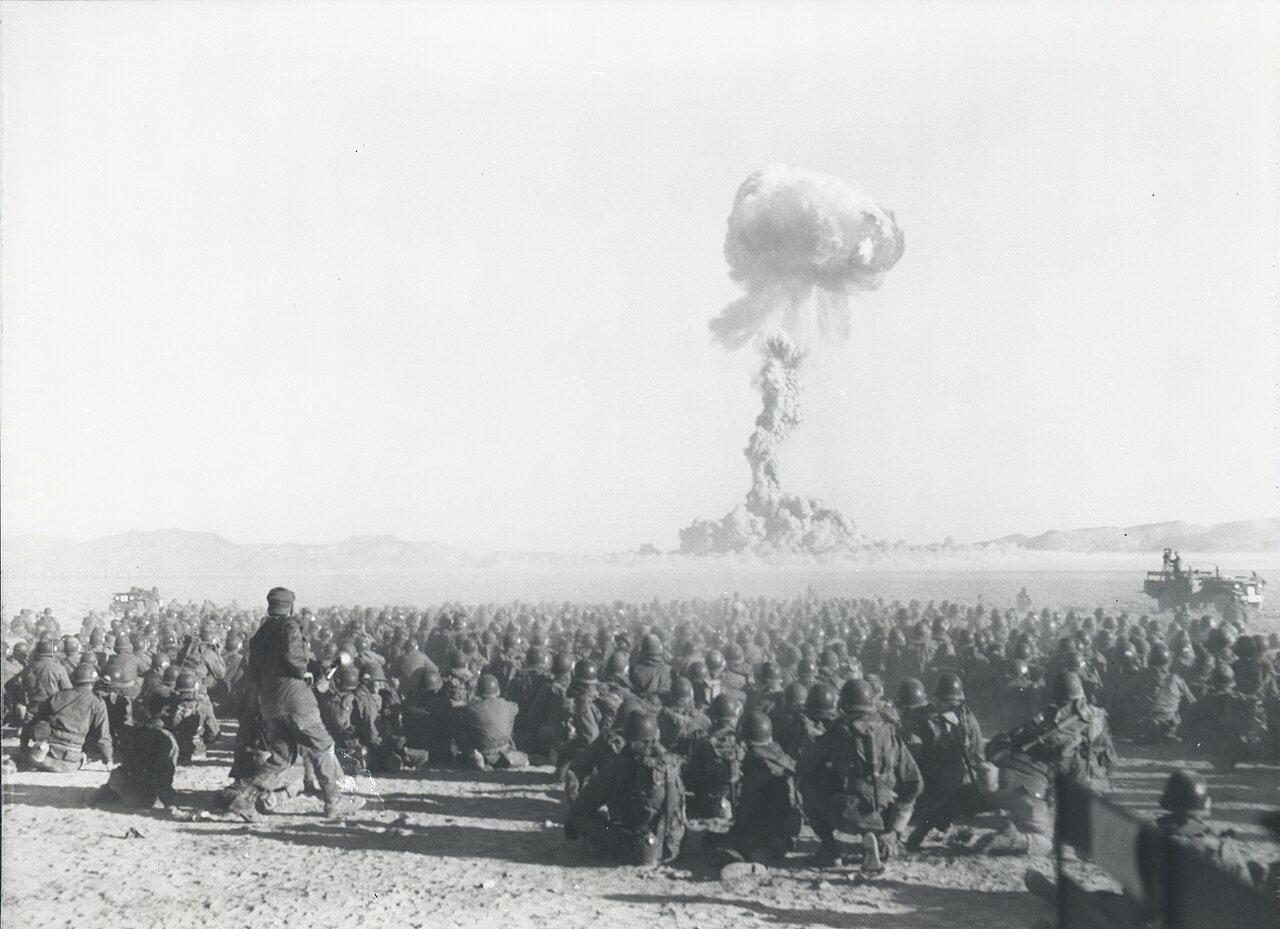
After the initial Trinity test confirmed the explosive capabilities of nuclear weapons, the United States continued to test while developing more sophisticated nuclear weapons in states like Nevada and New Mexico. As countries like the Soviet Union and the United Kingdom hurried to nuclearize, nuclear testing would be brought worldwide, with mushroom clouds exploding above areas like Algeria and former Soviet state Kazakhstan.
As larger, more powerful nuclear weapons were created, testing would cause even greater damage than estimated. One of the worst documented cases of this was the Castle Bravo nuclear test, which had a larger explosive yield than expected — 1,000 times that of the bomb the United States dropped on Hiroshima — and caused a mass evacuation of Marshall Islanders and a diplomatic incident from the accidental radiation poisoning of a Japanese fishing trip.
The disaster of Castle Bravo strengthened the movement against nuclear testing, and in the following year, the United States, United Kingdom, Canada, France and the Soviet Union began discussions on a nuclear testing ban. However, it was not until the United States and the Soviet Union went to the brink of nuclear war during the Cuban Missile Crisis of 1962 that talks would accelerate and culminate in the creation of the Limited Test Ban Treaty (LTBT) in 1963.

While the LTBT limited atmospheric testing, underground testing still contaminated the ground with radiation and brought radioactive material into the atmosphere. The LTBT did bind nuclear-armed states to work on a more complete test ban treaty, which would be realized as the Comprehensive Test Ban Treaty (CTBT), which opened for signatures in 1996. The United States has signed but not ratified the treaty, though the CTBT instituted a de facto nuclear testing moratorium and only North Korea has conducted an explosive nuclear weapons test in the 21st century.
Overall, 2,056 nuclear test explosions have occurred worldwide; 1,030 of those tests were conducted by the United States.
The Present
President Trump’s comments that the U.S. would restart “nuclear testing” “on an equal basis” are confusing and demonstrate a lack of understanding of both the current reality and consequences of such testing.
Technology allows us to know when every significant nuclear test explosion occurs, and we know with certainty when each country tests and any testing that may have occurred would have had to be too small to learn much from. We also know more than in the 1940s of the dangers of nuclear testing. Generations of Americans today suffer from cancer and other radiation-related illnesses due to the radiation exposure experienced by their ancestors and the mass radioactive contamination of soil, food supplies and water. After fighting for funds to ease the financial burden of their medical bills, downwinders succeeded and the was expanded in July 2025 despite neglecting key states with a heritage of nuclear tests. In August 2026, the Radiation Exposure Compensation Reauthorization Act (RECRA) was introduced in the House with bipartisan support.
Due to past American nuclear tests, the United States has an abundance of data on the viability of its nuclear arsenal and has no need to resume explosive testing. As our Senior Policy Director John Erath wrote after his tour of the Nevada National Security Site, past and current U.S. nuclear weapons programs have been “specifically designed so as not to require further testing such as was done during the Cold War.”
Further, resumption of U.S. testing would lead other countries to do the same, which would benefit China and Russia more than anyone else, because they need the data it would provide, while the United States does not. As our then-Research Analyst Shawn Rostker wrote in a piece in Just Security, “restarting nuclear tests would neither strengthen U.S. security nor compel challengers to submit to U.S. demands.” President Trump’s declaration to restart nuclear testing is misguided and serves only as a show of force that would embolden the United States’ enemies and encourage nuclear proliferation across the world.
The Future
The United States has yet to ratify the Comprehensive Test Ban Treaty (CTBT), and doing so would be a clear step forward in saying no to U.S. nuclear testing and testing abroad. Maintaining the moratorium without ratification, as the United States has done for 30 years, would send a clear signal that the United States will not restart nuclear tests.
Congress has the power — and the responsibility — to prevent the United States from conducting any further nuclear tests. The best way to ensure the United States does not resume explosive nuclear testing is to ratify the CTBT. Short of that, Congress must block funding for future explosive tests and prevent the administration from sending dangerous signals to other nuclear-armed states. Congress should also support efforts to compensate victims of previous nuclear tests by extending and expanding legislation to bring justice to victims and their families.
The Trump administration has the power — and the responsibility — to maintain the moratorium on explosive nuclear testing that has stood for 30 years and to stop using dangerous and inaccurate rhetoric about resuming this practice. There continues to be no technical reason to resume explosive testing; in fact, rather the opposite applies. The negative ramifications of using explosive nuclear tests as a political statement are also disproportionate to any perceived gain. The nation set to benefit most from an end to the current moratorium is China.
Finally, people like you have the power — and the responsibility — to learn more about nuclear tests and hold your elected officials to account. We know the United States does not need to conduct more explosive nuclear tests to know our weapons are safe and effective. We know the harm such tests have caused in the past. We know resuming explosive nuclear testing would lead to other countries resuming tests too, which would go against U.S. national security interests and potentially hurt tens of thousands of innocent people worldwide. The United States does not need to test and officials should not imply it intends to do so. The cost is too much to bear.
Recent Analysis on Nuclear Testing
- 81 years after first atomic test, AI increases nuclear risks July 16, 2026
- Experts: Full nuclear weapons tests would backfire on US November 5, 2025
- Will Trump actually test nuclear weapons? Experts are ‘disturbed’ and urge clarification October 30, 2025
- Op-ed: Nuclear Testing Is a Relic. Resuming It Would Be Reckless. April 8, 2025
- Fact Sheet: The U.S. Nuclear Security Enterprise/Nuclear Weapons Complex March 13, 2024
- No Good Reason for Nuclear Testing, Part 2 December 8, 2023
- No Good Reason for Nuclear Testing October 11, 2023
- After record year of arms tests, what’s in North Korea’s arsenal? November 9, 2022
- Notable Nuclear Tests: Tsar Bomba October 26, 2022
- Fact Sheet: Nuclear Testing 101 October 18, 2022
