Senator Chris Murphy (D-Conn.) discusses the need for a coherent progressive foreign policy strategy.
U.S. Defense Spending Vs. Global Defense Spending
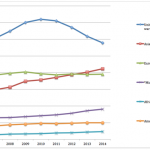
According to the SIPRI Military Expenditure Database 2015, in 2014, the U.S. approved $609.9 billion in defense budget authority (fiscal year 2014 dollars). This figure includes funding for the Pentagon base budget, money allocated for the Pentagon in the Overseas Contingency Operations fund, and defense related activities in the 050 budget function. It also includes Department of Energy-administered atomic energy defense activities.
What to Watch: Defense Authorization Bill

The 1987 INF treaty prohibits Russia and the United States from having land-based ballistic and cruise missiles with ranges between 500-5500 kilometers. The United States has accused Russia of testing a cruise missile that would violate this range, although there is no evidence that they have deployed these cruise missiles.
Letter to President Obama on Leaving a Nuclear Legacy
Six years ago this week in Prague you gave hope to the world when you spoke “clearly and with conviction” of “America’s commitment to seek the peace and security of a world without nuclear weapons.”1 Later that year, your promotion of nuclear non-proliferation was cited when you were awarded the Nobel Peace Prize.
How Much are We Spending to Prevent Nuclear Terrorism?
The Obama administration has requested $12.6 billion for the National Nuclear Security Agency (NNSA) as part of its Fiscal Year 2016 Department of Energy budget request. $1.9 billion of that request will go towards Defense Nuclear Non-Proliferation (DNN) programs tasked with preventing the spread of nuclear weapons and materials. The programs facilitate cooperation with international partners to better secure, monitor, and dispose of vulnerable nuclear material (military and civilian) and other radiological waste.