On February 5, 1958, a B-47 bomber dropped a 7,600-pound nuclear bomb into waters off Tybee Island, Georgia after colliding with an F-86 fighter jet. At the time, the quantity of radioactive material, the destructiveness capability of the bomb, and whether it contained a dummy trigger were unclear. The bomb was found to be a […]
Fiscal Year 2024 Defense Budget Request Briefing Book
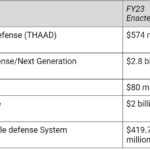
FY23 enacted levels come from FY24 President’s Budget documents and the Center for Arms Control and Non-Proliferation’s Final Summary: Fiscal Year 2023 Omnibus Appropriations Bill Table numbers in parentheses are increases or decreases from the FY23 Enacted Level unless otherwise specified. Numbers may not add up due to rounding Total National Defense Discretionary Spending Request […]
Fact Sheet: Thermonuclear Weapons
Thermonuclear weapons, sometimes referred to as Hydrogen, or “H-bombs,” utilize both atomic fission and nuclear fusion to create an explosion. The combination of these two processes releases massive amounts of energy, hundreds to thousands of times more powerful than an atomic bomb. Origins Development of the hydrogen bomb dates to the 1940s during The Manhattan […]
Strategic Arms Reduction Treaty (START I)
The Strategic Arms Reduction Treaty (START I), signed in 1991, was a bilateral arms control treaty between the United States and the Soviet Union. The result of the agreement was the first significant reduction in the number of strategic nuclear weapons in both the U.S. and the Soviet stockpiles. It entered into force in 1994, […]
After record year of arms tests, what’s in North Korea’s arsenal?
Executive Director John Tierney spoke with Al Jazeera about North Korea’s recent missile tests and provocations. John Tierney, the executive director of the Center for Arms Control and Non-Proliferation, said some experts do not believe “North Korea has yet mastered any ability to actually miniaturise and place a weapon successfully” on an ICBM, and they […]