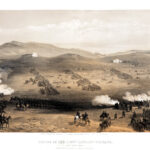
by Joseph A. Getto* In the autumn of 1854, on the battlefields of the Crimean War, British forces under Field Marshal Lord Raglan faced Russian defenders near Sevastopol. When enemy troops seized several artillery positions, Raglan — watching from a distant ridge — dispatched a vague order demanding that cavalry “advance rapidly to the front” […]
Next Up in Arms Control
When Recognition Becomes a Risk: Risky Trumpian Rhetoric
by SeungHwan Kim* On October 24, 2025, President Donald Trump, aboard Air Force One en route to Asia, made a short remark with profound implications about North Korea (DPRK): “Well, I think they are sort of a nuclear power…” Since the start of his presidential campaign, Donald Trump has consistently emphasized his personal rapport with North Korean leader Kim Jong […]
Intangible Threats: How Uncontrolled Knowledge Fuels Proliferation
by Mathew Montiel* How do we govern knowledge? Can we control knowledge? If I gave you blueprints for an LGM-35 Sentinel Intercontinental Ballistic Missile, could you build it? Thankfully, most of us could not. But it’s not because we can’t figure it out; it’s because there are still significant gaps between expertise, infrastructure and materials […]
Attacking the Brain: Why NC3 Needs a Treaty
by Roc Iore* Your arms, legs, joints, and muscles are functioning correctly, as are your eyes, ears, brain and nervous system. Even if you live in a competitive environment with other people around you, everyone agrees not to attack each other’s bodies. Everyone can also attack each other’s ability to see, hear, feel and make […]
Reimagining the Pelindaba Treaty: Africa’s Role in a New Arms Control Era
by Nkazimulo Moyeni* As Africa accelerates its peaceful nuclear energy ambitions under the watch of international safeguards, the frameworks that govern arms control must evolve to reflect the continent’s energy needs and geopolitical aspirations. Africa is no longer just a passive observer of great power nuclear rivalry, but can become a strategic actor in shaping […]