• Skip to main content
  • Skip to primary sidebar
  • Skip to footer

Center for Arms Control and Non-Proliferation

Center for Arms Control and Non-Proliferation

  • Policy Issues
    • Fact Sheets
    • Countries
    • Nuclear Weapons
    • Non-Proliferation
    • Nuclear Security
    • Biological & Chemical Weapons
    • Defense Spending
    • Missile Defense
    • No First Use
  • Nukes of Hazard
    • Podcast
    • Blog
      • Next Up In Arms Control
    • Videos
  • Join Us
  • Press
  • About
    • Staff
    • Boards & Experts
    • Jobs & Internships
    • Financials and Annual Reports
    • Contact Us
  • Donate
  • Search
You are here: Home / Archives for Nukes of Hazard blog

April 23, 2010

Validators! Mount Up!, Cont’d

Travis got this ball rolling last week, but we’ve put together a longer list of what some folks with some pretty serious credibility on national security issues have been saying about the NPR and New START.  And it don’t exactly mix and match with what some of our good friends on the right have been saying.  Read the whole thing below the jump.  Here are a few excerpts:

“The chiefs and I fully support the findings of this nuclear posture review, because we believe it provides us and our field commanders the opportunity to better shape our nuclear weapons posture, policies and force structure to meet an ever-changing security environment….Even while it reduces the role played by nuclear weapons – a reduction I wholly endorse – this Nuclear Posture Review reaffirms our commitment to defend the vital interests of the United States and those of our partners and allies with a more balanced mix of nuclear and non-nuclear means than we have at our disposal today.”

Admiral Michael Mullen, Chairman, Joint Chiefs of Staff
Press Briefing on the Nuclear Posture Review, April 6, 2010

“The Russians may issue a statement saying that they have the right to withdraw if we deploy defenses to threaten the strategic balance.  They issued such a statement in 1991; we issued a statement right back and both of them went into the dustbin of history.  I think it would be – it is for the Senate to decide whether this treaty deserves ratification.  I think it does.  It would be tragic if we allowed Russian statements made for domestic purposes to derail it. [T]here is no restriction in START with regard to our missile defense capability.”

Ambassador Linton Brooks, former Administrator, National Nuclear Security Administration
Press Briefing on Understanding New START and the Nuclear Posture Review, April 9, 2010


“There’s a particularly important point that I think will strengthen us for the future under the NPR.  It’s something I’ve advocated for in the past, and this is the funding that is, and the commitment to funding and the focus on improving the nuclear enterprise under NNSA; this will truly strengthen the deterrent, not only for today but for 20, 30, 40 years from now.  And the NPR’s endorsement of that I think is one of the most important aspects of that for strengthening our deterrence posture for the future.”

General Kevin Chilton, Commander, STRATCOM
Testimony before the House Armed Services Committee Subcommittee on Strategic Forces, April 14, 2010

What Key U.S. Military Leaders and Influential Moderates and Republicans are Saying About the Nuclear Posture Review, Missile Defense, and Modernization

Critics of the New START agreement and the Nuclear Posture Review claim that the new policy limits U.S. nuclear options, constrains missile defense, and fails to modernize our nuclear weapons complex.  Our military leaders disagree.

U.S. can maintain a robust and flexible nuclear deterrent under the Nuclear Posture Review and New START

“We have more robust deterrents today, because we’ve added to the nuclear deterrent missile defense. And…with the phased adaptive approach that the president has approved, we will have significantly greater capability to deter the Iranians, because we will have a significantly greater missile defense. We’re also developing this conventional prompt global strike, which really hadn’t gone anywhere in the — in the Bush administration, but has been embraced by the new administration. That allows us to use long range missiles with conventional warheads. So we have — we have more tools if you will in the deterrents kit bag than — than we used to.”
Robert Gates, Secretary of Defense
Interview Jake Tapper of ABC’s “This Week,” April 9, 2010

“The chiefs and I fully support the findings of this nuclear posture review, because we believe it provides us and our field commanders the opportunity to better shape our nuclear weapons posture, policies and force structure to meet an ever-changing security environment….Even while it reduces the role played by nuclear weapons – a reduction I wholly endorse – this Nuclear Posture Review reaffirms our commitment to defend the vital interests of the United States and those of our partners and allies with a more balanced mix of nuclear and non-nuclear means than we have at our disposal today.”
Admiral Michael Mullen, Chairman, Joint Chiefs of Staff
Press Briefing on the Nuclear Posture Review, April 6, 2010

“No, I don’t feel constrained in the least, really. I think we have more than enough capacity and capability for any threat that we see today or might emerge in the foreseeable future. The capabilities that have been brought onboard with our missile defenses and other general purpose forces have been pretty substantial. The capabilities that we have in our existing nuclear fleet are more than adequate for the threats that we know of and that we are — we believe we could face.”
Marine Corp General James Cartwright, Vice Chairman, Joint Chiefs of Staff
Special Briefing on the Nuclear Posture Review from the Pentagon, April 6, 2010

“Based on [STRATCOM’s] analysis and through continued discussions with DoD leadership, my view is that [the NPR and New START] and associated budgetary investments continue to support these deterrence requirements, and that the New START agreement warhead and platform numbers provide appropriate military flexibility….I am confident that the NPR and New START outline an approach that continues to enable the men and women of U.S. Strategic Command to deliver global security for America today and in the future….START does not limit anything that we’d need to do.”
General Kevin Chilton, Commander, STRATCOM
Testimony before the House Armed Services Committee Subcommittee on Strategic Forces, April 14, 2010

“We believe that the substantial edge the U.S. has developed in conventional military capabilities, which the NPR notes, permits this country to sharply reduce reliance on nuclear weapons.”
William Perry, former Secretary of Defense and Chairman of the Congressional Commission on the Strategic Posture of the United States, and James Schlesinger, former Secretary of Defense and Vice-Chairman of the Congressional Commission on the Strategic Posture of the United States, April 14, 2010

New START does not limit U.S. missile defenses

“Missile defense is not constrained by this treaty.”
Robert Gates, Secretary of Defense
White House Press Briefing on the Announcement of the New START Treaty, March 26, 2010

“There are no constraints in this treaty associated with our missile defenses or our prompt global strike capabilities, read conventional.”
Marine Corp General James Cartwright, Vice Chairman, Joint Chiefs of Staff
Special Briefing on the Nuclear Posture Review from the Pentagon, April 6, 2010

“[T]here is no restriction in START with regard to our missile defense capability.”
General Kevin Chilton, Commander, STRATCOM
Testimony before the House Armed Services Committee Subcommittee on Strategic Forces, April 14, 2010

“The New START Treaty has no constraints on current and future components of the BMDS development or deployment. Article V, Section 3 of the treaty prohibits the conversion of ICBM or SLBM launchers to missile defense launchers, and vice versa, while “grandfathering” the five former ICBM silos at Vandenberg AFB already converted for Ground Based Interceptors. MDA never had a plan to convert additional ICBM silos at Vandenberg and intends to hedge against increased BMDS requirements by completing construction of Missile Field 2 at Fort Greely. Moreover, we determined that if more interceptors were to be added at Vandenberg AFB, it would be less expensive to build a new GBI missile field (which is not prohibited by the treaty). Regarding SLBM launchers, some time ago we examined the concept of launching missile defense interceptors from submarines and found it an unattractive and extremely expensive option. As the committee knows, we have a very good and significantly growing capability for sea-based missile defense on Aegis-capable ships. Relative to the recently expired START Treaty, the New START Treaty actually reduces constraints on the development of the missile defense program.”
Lieutenant General Patrick O’Reilly, Director, Missile Defense Agency
Testimony before the House Armed Services Committee Subcommittee on Strategic Forces, April 15, 2010

“The Russians may issue a statement saying that they have the right to withdraw if we deploy defenses to threaten the strategic balance.  They issued such a statement in 1991; we issued a statement right back and both of them went into the dustbin of history.  I think it would be – it is for the Senate to decide whether this treaty deserves ratification.  I think it does.  It would be tragic if we allowed Russian statements made for domestic purposes to derail it. [T]here is no restriction in START with regard to our missile defense capability.”
Ambassador Linton Brooks, former Administrator, National Nuclear Security Administration
Press Briefing on Understanding New START and the Nuclear Posture Review, April 9, 2010
The Obama administration has put forth a credible plan to enhance the safety, security, and effectiveness of the U.S. nuclear arsenal and modernize the U.S. nuclear weapons complex

“So the chiefs, and I and – and the directors of the nuclear labs are all very comfortable that – that this [the Nuclear Posture Review] puts us in a position to modernize the stockpile and – and the $5 billion dollars that Hillary [Clinton] has referred to is actually just what’s in our budget to – for this program.”
Robert Gates, Secretary of Defense
Interview Jake Tapper of ABC’s “This Week,” April 9, 2010

“So both for myself, as a previous commander at STRATCOM, and also for General Shelton, we both feel very comfortable with these numbers and with these descriptions of reuse, replace, refurbishment, so to speak.”
Marine Corp General James Cartwright, Vice Chairman, Joint Chiefs of Staff
Special Briefing on the Nuclear Posture Review from the Pentagon, April 6, 2010

“There’s a particularly important point that I think will strengthen us for the future under the NPR.  It’s something I’ve advocated for in the past, and this is the funding that is, and the commitment to funding and the focus on improving the nuclear enterprise under NNSA; this will truly strengthen the deterrent, not only for today but for 20, 30, 40 years from now.  And the NPR’s endorsement of that I think is one of the most important aspects of that for strengthening our deterrence posture for the future.”
General Kevin Chilton, Commander, STRATCOM
Testimony before the House Armed Services Committee Subcommittee on Strategic Forces, April 14, 2010

“The Nuclear Posture Review (NPR) reaffirms President Obama’s commitment to providing the Department of Energy and its National Nuclear Security Administration (NNSA) the resources required to support the President’s nuclear security agenda and maintain the safety, security and effectiveness of the U.S. nuclear deterrent without underground testing….This NPR reflects that commitment [to sustain a safe, secure, and effective nuclear arsenal] and our budget request, if approved, would provide the resources required to make that possible….Further, the Administration’s commitment to a clear and long-term plan for managing the stockpile ensures the scientists and engineers of tomorrow will have the opportunity to engage in challenging research and development activities that are essential to their recruitment and retention.”
Thomas D’Agostino, Administrator, National Nuclear Security Administration
Testimony before the House Armed Services Committee Subcommittee on Strategic Forces, April 14, 2010

“Now that the NPR is completed, we see that it is compatible with our recommendations. The review gives a comprehensive and pragmatic plan for reducing nuclear risks to the United States. We believe it offers a bipartisan path forward — while allowing for healthy disagreements on specific issues….We also see that the NPR puts special emphasis, as our report recommended, on improving the nation’s complex nuclear infrastructure and enhancing programs to recruit and keep the nation’s best scientific minds. The administration’s commitment to increase investment in our national laboratories also ensures that they continue their important role in sustaining a safe, secure and effective nuclear arsenal and in solving many other problems facing the nation.”
William Perry, former Secretary of Defense and Chairman of the Congressional Commission on the Strategic Posture of the United States, and James Schlesinger, former Secretary of Defense and Vice-Chairman of the Congressional Commission on the Strategic Posture of the United States, April 14, 2010
April 14, 2010

“So I think that it is hard to come up with a definition of supporting modernization that the Nuclear Posture Review isn’t responsive too….[A] strong case can be made that the Nuclear Posture Review is responsive to the concerns that we be able to modernize, in the sense of finding new and better ways to keep the arsenal safe, secure and reliable, while forswearing modernizing to the extent that, that means doing something fundamentally new.”
Ambassador Linton Brooks, former Administrator, National Nuclear Security Administration
Press Briefing on Understanding New START and the Nuclear Posture Review, April 9, 2010

Posted in: Front and Center, Nukes of Hazard blog

April 22, 2010

Imitation is the Best Form of Flattery

North Korea’s Foreign Ministry yesterday released its ‘Memorandum on the N-Issue’.  The majority of material is nothing new.  For example the memo states that the North’s nuclear program was motivated primarily in response to the threat of the U.S., that its weapons have ‘drastically’ reduced the potential for a war, and that a peace treaty is required as a prerequisite to denuclearization.   But beyond these recognizable declarations, the document does delve into some new areas – all of which are seemingly interlinked by an underlying attempt to assert and legitimize North Korea’s international nuclear status…

Although North Korea’s desire to be formally recognized as a nuclear weapon state are nothing new, yesterday’s document expresses these desires in a new context.  The document suggests that North Korea’s external relations department have been keeping a close eye on the recent flurry of non-proliferation activity and news.  Consequently it seems that North Korea has concluded that jumping on the non-proliferation bandwagon is now the best way for it to assert its nuclear weapon status.

First – in the context of the recent Nuclear Security Summit, the Foreign Ministry’s call to ‘join the international efforts [on] nuclear non-proliferation and on nuclear material security’ can be read as an attempt to inject some credibility into the concept of North Korea as a responsible nuclear steward.  A country that should be regarded on an equal footing with others in the nuclear ‘club’, that could presumably even contribute expertise to the next Nuclear Security Summit, to be held in 2012 in South Korea.  

Next, it seems the mostly positive international reaction to the U.S Nuclear Posture Review (NPR) has motivated North Korea to attempt to win similar praise.  Thus the articulation of the ‘mission of the nuclear armed forces of the DPRK’, which describes Pyongyang’s arsenal largely in defensive terms, appears to be an overt attempt to emulate Washington’s mainly defensive posture.  By going down this path, North Korea may be hoping to win some hearts and minds and be seen in a similarly responsible and non-aggressive light – characteristics it realizes are required in order to get the recognition it so desires.  Note: It’s worth pointing out that Pyongyang didn’t catch up to Washington in one respect: It’s posture statement includes its own version of the so-called “Warsaw Pact” clause, which the U.S. NPR just ditched.

Finally, North Korea’s PR people seem to have also picked up on the momentum surrounding the forthcoming NPT Review Conference as a way of aligning their nuclear status with that of the five recognized nuclear states.  Indeed, part of the Memorandum is strongly reminiscent of the language and obligations found in Article VI of the NPT. Compare:

From North Korea’s posture memo: ‘[North Korea will] neither participate in [a] nuclear arms race nor produce more than it feels necessary… [And will] join the international nuclear disarmament efforts’
To:

And from Article VI of the NPT: ‘[Parties will pursue] effective measures relating to [the] cessation of the nuclear arms race at an early date and to nuclear disarmament.’

This similar choice of language attempts to paint North Korea as an advocate for disarmament and as a responsible nuclear steward – again, no matter how incredible that might sound to some.

In short, it appears the objective of this Memorandum is to present North Korea’s nuclear weapon status to the rest of the world as an irrefutable and justifiable fact, using the language and rationales traditionally used by the other nuclear weapon states (apart from Israel).   Just like them, North Korea is now saying that it will keep nuclear weapons until ‘they are eliminated from the peninsula and the rest of the world’.  You could say imitation is the best form of flattery.

Posted in: Front and Center, Nukes of Hazard blog

April 22, 2010

Senate Budget Resolution Passes 12 to 10

Chairman Kent Conrad announced the passage of his fiscal 2011 budget resolution by the Senate Budget Committee today on a party line vote of 12 to 10.  The document is a nonbinding framework that doesn’t have to be signed into law by the president, but provides a strong indication of the budget road ahead.

Proposals include a $4 billion cut of President Obama’s discretionary spending request, as well as a freeze of non-security discretionary spending for three years.  

No surprises here – I’m sure we can all think of a few things that might be cut from the President’s request, and since it does make up over half of discretionary spending, it would be prudent to start with defense, right?  Not according to Conrad.

The Chairman’s Mark finds its entire $4 billion cut in the budget for International Affairs, a move that, according to the document, is “strong on national defense” – meaning weak on development and diplomacy?  

Also unexplained is a change to the reporting of discretionary spending.  Unlike previous years, where spending was broken into Defense and Non-Defense, this resolution breaks spending into Security and Non-Security, providing lines for Defense, International Affairs, Veterans and the Department of Homeland Security.  This may seem like a small change, but could be highly misleading.  

On one hand, expanded reporting may simply provide a more detailed breakdown of cuts, separating those programs that are exempt from the spending freeze from those that are not.  Unfortunately, this simple breakdown also implies that the majority of cuts Senate Democrats plan to propose would come from “security” initiatives.  Previously, Conrad’s $4 billion cut would have been listed under Non-Defense.  

In reality, the only portion of the President’s fiscal 2011 budget increase for International Affairs that is left intact is funding for what one might call security:

The Chairman’s Mark, therefore, preserves the increase requested due to our current wars, as well as the supplemental funding. Additionally, the Chairman’s Mark also funds an increase of $1.2 billion for our nation’s allies, including Israel, as part of the Middle East peace process… Given our severely constrained fiscal environment, the Chairman’s Mark focuses on those capabilities crucial to our current wars and the Middle East and increases international affairs funding to $54.8 billion for 2011.

As a result, proposed cuts will likely come from programs related to the things I listed above, development and diplomacy.  

Posted in: Front and Center, Nukes of Hazard blog

April 21, 2010

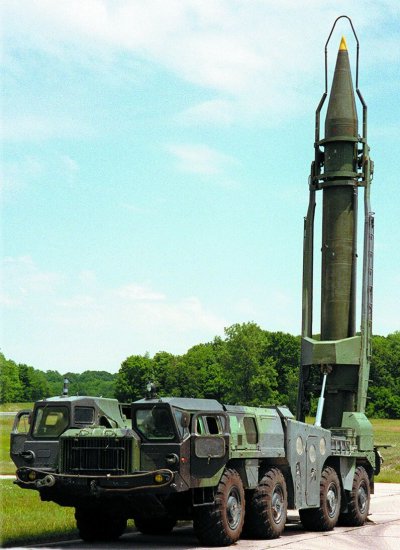
Hezbollah and SCUDS – An Unlikely Combination?

Reports last week that Syria had transferred an unspecified number of SCUD missiles to Hezbollah in Lebanon, whilst vehemently denied by Damascus, are now being ignored, ambiguously, by senior Hezbollah sources.  If indeed the allegations are true, then the transfer would represent the first acquisition of SCUD type missiles by a non-state actor, a violation of UN Resolution 1701 – which called for the disarming of all armed groups in Lebanon.  The missiles would also now be the furthest-range and most precise weapons in Hezbollah’s arsenal, reported in 2009 to contain as many as 80,000 short-range rockets.  

Upon closer inspection, however, it seems that any SCUD missiles would have little utility for Hezbollah’s operations in Southern Lebanon.  Thus, if the story is true, reactions which suggest the possible transfer could or should ignite a war seem highly misplaced…

The majority of the rockets Hezbollah fired during the 2006 Lebanon War were either of the Katyusha type, with a range of 20-40km, or improved variants of the Grad type, with ranges in the region of 70 – 100km.  Both rockets are cheap to produce and thus Hezbollah acquired thousands of them.  Because both rocket types were characterized by having man portable, remote, or truck mounted launchers, and were powered by solid fuel, they had the advantage of being able to be used by personnel with little training.  This, combined with the scale of the arsenal, enabled Hezbollah to continue their bombardment even after countless launch operatives were killed by Israeli air attacks.  

Since the 2006 conflict, it is evident that Hezbollah has continued its effort to stockpile rockets like those it used in its war with Israel.  The 2009 claim that they possess 80,000 rockets suggests their arsenal has now increased in size by nearly three times since 2006.  Any advances in Israeli anti-rocket technology will be greatly minimized by the sheer scale of this new force.  In addition, it seems that Hezbollah recently took delivery of the Iranian made Fatah-110, capable of reaching targets up to 200km away using GPS guidance.  Launched from southern Lebanon, the extended range of the Fatah-110 would now enable Hezbollah to target Tel Aviv and Jerusalem.  These factors all greatly increase Hezbollah’s deterrence vis-à-vis Israel.  In this context, and for a number of other reasons, it thus seems puzzling that they would be interested in acquiring SCUD capabilities from Damascus.  

First, in contrast to Hezbollah’s current rocket capability, maintaining and operating any variant of the SCUD is substantially harder work.  Being liquid fuelled, SCUDs require trained personnel knowledgeable of how to handle extremely hazardous liquid fuels.  In addition, SCUD missiles and their transporter erector launchers (TELs) require a fair amount of logistics support.  Consequently Hezbollah would have had to send personnel to undergo extensive training in Syria if they did acquire any SCUDs.  And if these personnel were killed in conflict, replacing them would be far harder than replacing the personnel that launch Hezbollah’s short-range rockets.

Second, road-mobile SCUD launchers are substantial pieces of equipment – far easier to see from reconnaissance aircraft and satellites than the improvised rocket launching facilities that Hezbollah used in 2006.  Given the Israeli Air Force’s experience and success in targeting the much smaller mobile launchers of the 2006 Lebanon War, it seems probable that any SCUD launchers would be even easier targets for Israel to destroy today.  And because of this, they could even invite a pre-emptive Israeli strike, something Hezbollah would want only if it was actively seeking war (which is nonetheless possible).

Even if it did not destroy the launchers in advance of an attack, Israel has deployed its advanced Arrow missile defense system throughout the country to protect exactly from the threat of a SCUD type ballistic missile attack.  Indeed, it was precisely because this system is so well suited to intercepting SCUDs that it proved so useless for Israel in defending against Hezbollah’s short-range rocket bombardment in 2006.  As such, it is hard to understand why Hezbollah would now be motivated to procure a system so potentially susceptible to interception.

Finally, unless Hezbollah were to develop a chemical or biological warhead for its SCUDs, it is hard to see what strategic advantage (aside from range) SCUDs might provide over their rocket based alternatives.  Indeed, in using conventionally armed warheads, Iraq’s volley of 39 SCUDS fired at Israel in 1991 resulted in just fourteen deaths.  Thus without non-conventional warheads they offer little destructive advantage.  Paradoxically, because Hezbollah are aware that using non-conventional warheads against Israel would invite a highly severe response (possibly eroding their public support), it seems even less likely that they would be interested in pursuing a non-conventional capability.

While it thus seems unlikely that it would be in Hezbollah’s interest to acquire SCUD missiles form Syria, it does of course remain plausible that a transfer did take place. For these very same reasons though, even if Hezbollah has acquired a limited SCUD capability, little has changed in the balance of power.  As a result, the notion that this transfer is worthy of a military response, especially in the context of Hezbollah’s arsenal of 80,000 short-range rockets, seems ill-advised.  

Posted in: Front and Center, Israel, Nukes of Hazard blog

April 19, 2010

One Down, Two to Go – and a Big Win for India

On March 29, the U.S. and India reached an agreement which grants India the right to reprocess U.S.-origin spent fuel, meaning that the landmark U.S.-India nuclear trade deal is one step closer to reality.  The text of the agreement was released on March 30.

The reprocessing agreement includes protocols intended to prevent the diversion of U.S.-supplied nuclear materials to India’s weapons program.  However, the agreement – like the larger deal it is a part of – increases the potential for proliferation and nuclear terrorism…

Timothy Roemer, U.S. Ambassador to India, announced that the reprocessing deal was “part of the great, win-win narrative of the U.S.-India global partnership.”  Other sources, however, note that India has been able to secure significant concessions in the accord.  

For one, reprocessing will be monitored by the IAEA rather than U.S. officials, as Indians “did not want direct American oversight with an American flag on them. It is a symbolic, sovereignty issue for Indians.”  The only other countries operating under this model are Japan and EURATOM.  As Ted Jones of the U.S.-India Business Council noted, “India is now in a special circle. This is a big deal.”

Military facilities and existing stockpiles of nuclear fuel will continue to be exempt from inspections and safeguards. New Delhi has also refused to allow IAEA monitors access to a breeder reactor that can run on plutonium.  

While the U.S. will be able to suspend Indian reprocessing rights if a “serious threat” to national security or the physical protection of the reprocessing facility arises, in the case of a suspension of reprocessing rights beyond six months, the U.S. may be required to provide compensation for the adverse effect on the Indian economy resulting from the disruption of electricity generation.  

India was also able to secure the right to build additional reprocessing plants in the future.  While America had hoped to limit India to one such facility, New Delhi’s argument that it would be risky to transport fuel from reactors to the reprocessing plant through densely populated areas won the day.

The cooperation deal in general is a huge win for India, as they are still not party to the NPT.  The Indian exemptions have all been obtained despite the fact that diverted civilian nuclear fuel was used to build New Delhi’s first nuclear weapons three decades ago.

Despite the reprocessing agreement, hurdles remain before U.S. firms can break into the billion dollar Indian nuclear energy market.  While two sites have been identified for U.S.-built reactors, no company has yet been able to enter into a contract.  As documented on this blog, India must still pass a controversial nuclear-liability law and provide a letter of assurance on nonproliferation.  

At the recent Nuclear Security Summit, the 47 participating nations endorsed President Obama’s goal of securing all “loose” nuclear material within four years.  Yet the summit largely ignored the dangers posed by reprocessed plutonium.  As Edwin Lyman of the Union of Concerned Scientists pointed out “At a time when nuclear terrorism and proliferation concerns are only increasing, the United States should be doing everything it can to stop existing reprocessing, not facilitate more.”

Posted in: Asia, Front and Center, India and Pakistan, Nukes of Hazard blog

  • « Go to Previous Page
  • Page 1
  • Interim pages omitted …
  • Page 241
  • Page 242
  • Page 243
  • Page 244
  • Page 245
  • Interim pages omitted …
  • Page 281
  • Go to Next Page »

Primary Sidebar

Recent Posts

  • Will the Iran war set off a new nuclear arms race? “No one speaks of taking out Kim Jong Un” March 25, 2026
  • Front and Center: March 22, 2026 March 22, 2026
  • Why Did the United States Lift Sanctions on Assad’s Chemical Weapons Scientists? March 20, 2026
  • Iran’s Stockpile of Highly Enriched Uranium: Worth Bargaining For? March 16, 2026
  • Trump’s Claim About the Obama Nuclear Deal and Iran’s Nuclear Development March 12, 2026

Footer

Center for Arms Control and Non-Proliferation

820 1st Street NE, Suite LL-180
Washington, D.C. 20002
Phone: 202.546.0795

Issues

  • Fact Sheets
  • Countries
  • Nuclear Weapons
  • Non-Proliferation
  • Nuclear Security
  • Defense Spending
  • Biological and Chemical Weapons
  • Missile Defense
  • No First Use

Countries

  • China
  • France
  • India and Pakistan
  • Iran
  • Israel
  • North Korea
  • Russia
  • United Kingdom

Explore

  • Nukes of Hazard blog
  • Nukes of Hazard podcast
  • Nukes of Hazard videos
  • Front and Center
  • Fact Sheets

About

  • About
  • Meet the Staff
  • Boards & Experts
  • Press
  • Jobs & Internships
  • Financials and Annual Reports
  • Contact Us
  • Council for a Livable World
  • Twitter
  • YouTube
  • Instagram
  • Facebook

© 2026 Center for Arms Control and Non-Proliferation
Privacy Policy

Charity Navigator GuideStar Seal of Transparency